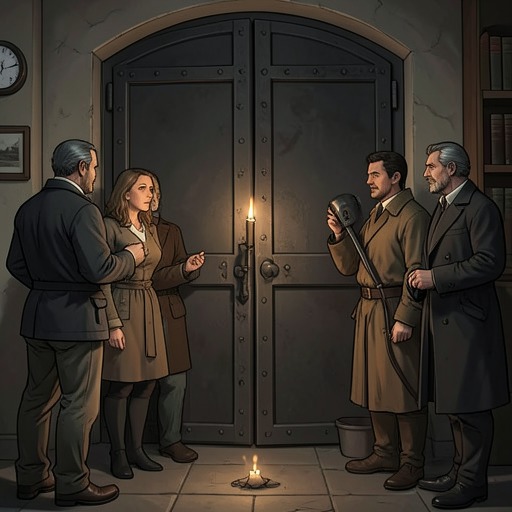
Doctor Herzenstube and Dmitri Karamazov
The Brothers KaramazovDoctor Herzenstube and Dmitri Karamazov are joined by a childhood kindness that neither time nor separation erases. When Dmitri returns to the doctor as a grown man, he remembers the pound of nuts Herzenstube bought him as a barefoot boy; the recognition moves both men to tears and briefly restores the vulnerable child beneath Dmitri’s troubled adult life.
The doctor’s memory of the boy
Herzenstube recalls Dmitri’s childhood while giving evidence about the Karamazov family. He insists that the boy had a good heart, both in childhood and afterward, and remembers feeling sorry for him when he was young. The memory is not of a grand rescue or a formal medical intervention: it centers on an ordinary, inexpensive gift to a child who had gone without such attention.
The doctor had recently arrived in the town and was forty-five. Seeing Dmitri, he wanted to buy him something children liked, but could not immediately remember its name. He groped toward the answer, distinguishing the treat from apples and describing small things that children put in their mouths and crack. Only then did he identify the gift as nuts, and say that he had bought Dmitri a pound because nobody had ever bought the boy a pound before.
A remembered gesture and a reunion
Herzenstube’s account moves between two encounters separated by twenty-three years. In the first, the doctor sees a child without boots and responds with sympathy expressed through a pound of nuts. He also recalls helping Dmitri complete a religious formula: the boy knew part of it, had forgotten the final words, and Herzenstube reminded him. The doctor says he felt sorry for him again, but Dmitri was taken away, and they did not meet again for many years.
The second encounter begins when the doctor, now white-haired and seated in his study, is visited by a blooming young man he would not have recognized. Dmitri identifies himself through a gesture: he holds up his finger, recalling the way the doctor had once spoken to him. The gesture makes memory tangible. The adult does not merely receive the doctor’s recognition; he brings the old scene back into the room and shows that he has carried it with him.
Gratitude, tenderness, and tears
Herzenstube understands that Dmitri has remembered the gift throughout his life. He embraces and blesses him, and sheds tears. Dmitri laughs, but he too weeps; the doctor observes that Russians may laugh when they ought to be weeping, yet insists that Dmitri’s tears are real. The exchange joins affection to gratitude without turning either man into a simple emblem: a small kindness has mattered deeply, and the grown man’s response contains both laughter and grief.
The doctor’s story also deepens his testimony about Dmitri. As he provides facts useful to the prosecution, he interrupts the evidentiary account with a recollection of the accused as a child with a good heart. His reminiscence does not settle the legal case or erase Dmitri’s later troubles. Instead, it supplies another measure of him: alongside the public image of a troubled young man stands someone capable of remembering, for decades, the person who once noticed him and gave him a small pleasure.
Significance of the relationship
The pound of nuts is modest precisely in the way that makes its lasting force legible. Herzenstube did not describe an elaborate act; he remembered recognizing a neglected child’s immediate delight and answering it with something no one had previously bought for him. Dmitri’s return, his identifying gesture, and his tears show the gift’s afterlife: an apparently small kindness became a durable point of connection between childhood and adulthood.
Their reunion also complicates a purely prosecutorial account of Dmitri. Herzenstube is speaking in a setting where his testimony can assist the case against the young man, yet the memory he adds affirms Dmitri’s earlier goodness and the emotional continuity that the legal narrative cannot contain by itself. The doctor’s remembered purchase does not prove innocence; it makes visible a relationship in which compassion, gratitude, and sorrow survive the passage of twenty-three years.